Trees add character, shade and natural beauty to outdoor spaces, but when a tree dies it can quickly become a concern for homeowners. A dead tree no longer has the strength or resilience of a healthy one, and its structure will gradually weaken over time. Although a dead tree may appear stable initially, it can pose a number of risks if left unattended.
For homeowners in Gloucester, Gloucestershire, understanding these risks is important when deciding how to manage trees on their property. At EM Tree Surgery Gloucester, we regularly help property owners identify potentially hazardous trees and provide professional solutions to maintain a safe and well-managed garden environment.
Increased Risk of Falling Branches
One of the most immediate risks associated with a dead tree is the likelihood of branches breaking and falling. Once a tree dies, the wood begins to dry out and lose its flexibility. As a result, branches become brittle and more vulnerable to snapping.
Strong winds, heavy rain or even the natural weight of the branches can cause them to break unexpectedly. Falling branches can create hazards for people, vehicles and garden structures located beneath the tree.
Removing or managing dead trees helps reduce the risk of these sudden branch failures.
Structural Weakness of the Entire Tree
Over time, a dead tree will begin to deteriorate internally. Without nutrients and moisture flowing through the trunk and branches, the wood gradually weakens. This process can make the entire tree unstable.
In severe cases, the trunk itself may split or collapse. When a dead tree loses its structural integrity, it may fall without warning, particularly during adverse weather conditions.
Professional tree surgeons can assess the stability of the tree and determine whether removal is necessary to maintain safety.
Potential Damage to Nearby Structures
Trees that are located near buildings, driveways, fences or other structures can cause significant damage if they fall or shed large branches. A dead tree standing close to a property presents a greater risk because its condition is already compromised.
Even smaller branches can cause damage when they fall from height, and larger limbs may affect roofing, garden features or boundary structures.
By addressing dead trees early, homeowners in Gloucester, Gloucestershire can help protect nearby parts of their property from unexpected damage.
Attraction of Pests and Decay
Dead wood often attracts insects, fungi and other organisms that break down the wood as it decomposes. While this is a natural part of the ecosystem, it can sometimes lead to problems when the tree is located close to residential areas.
Pests that inhabit decaying wood may spread to nearby plants or structures. In addition, fungal growth can accelerate the weakening of the tree’s structure, increasing the likelihood of branch or trunk failure.
Professional tree assessment can help identify whether a dead tree is becoming a source of pest activity or decay.
Impact on Garden Appearance
A dead tree can also affect the overall appearance of a garden. While living trees add vibrancy and natural beauty, a dead tree often looks dry, lifeless and out of place within the landscape.
Over time, peeling bark, broken branches and decaying wood can make the garden appear neglected. Removing a dead tree allows homeowners to restore the balance and visual appeal of their outdoor space.
In many cases, removing the tree also creates opportunities for planting new vegetation or redesigning the garden layout.
The Importance of Professional Tree Assessment
Determining whether a tree is dead and evaluating its condition requires professional expertise. Tree surgeons are trained to assess the structural stability of trees and recommend appropriate action.
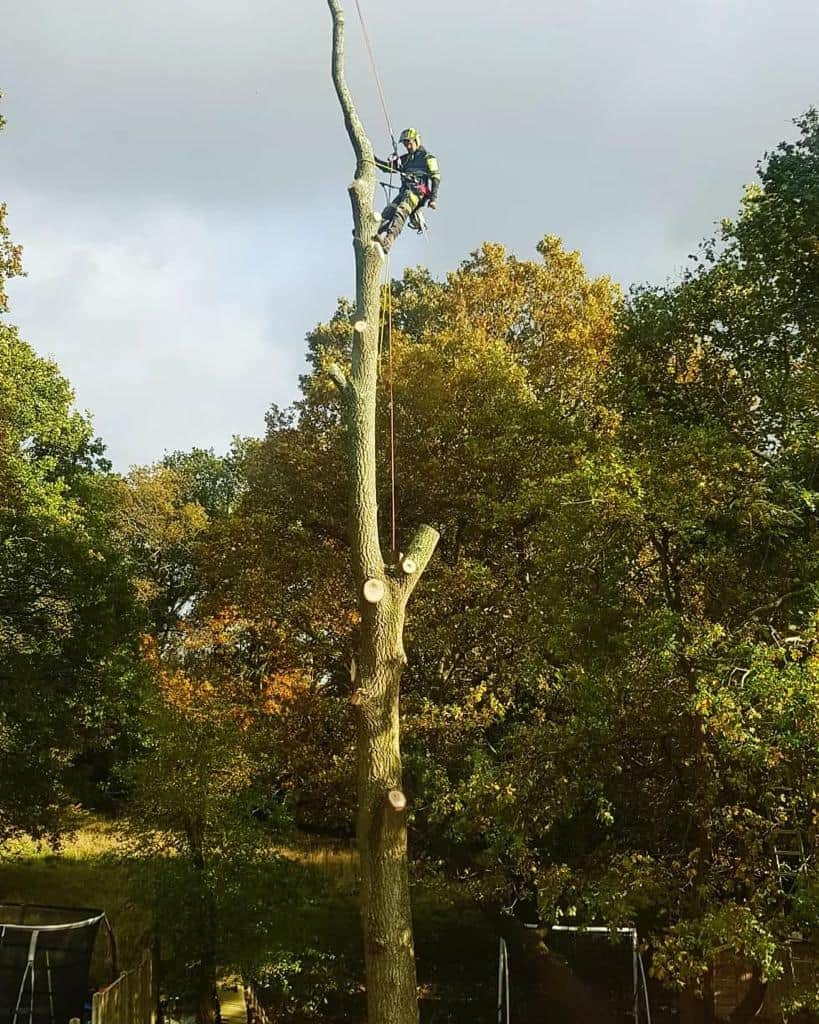
In some situations, removing a dead tree may be necessary to eliminate safety risks. In others, controlled dismantling or careful management may be required depending on the tree’s location and condition.
At EM Tree Surgery Gloucester, we provide professional tree assessments and safe removal services for homeowners in Gloucester, Gloucestershire.
Conclusion
Leaving a dead tree standing can create several risks, including falling branches, structural collapse, damage to nearby structures and the spread of pests or decay. Although a dead tree may appear stable at first, its condition will continue to deteriorate over time.
For homeowners in Gloucester, Gloucestershire, addressing dead trees promptly helps maintain a safe and well-kept garden environment. EM Tree Surgery Gloucester offers professional tree inspection and removal services designed to manage hazardous trees safely and restore balance to outdoor spaces.
Call us on: 01452 941 558
Click here to find out more about EM Tree Surgery Gloucester
Click here to complete our contact form and see how we can help with your tree needs.